A River Held Between Breaths
An edited version of this essay was published in the Palatka Daily News on January 17th, 2026. The version below reflects the author’s original draft.
I lay staring at the white ceiling tile above my sweat-soaked head, steadying my breath, quieting my mind, waiting for the next direction. When it comes, I contort my body—limbs and focus—into the next pose called. Blood flow is restricted to my lower body. I relax as best I can and remain completely still for forty seconds, which feels like an eternity.
I slowly sit up, extend my legs, and lie back down. Inhaling deeply, freshly oxygenated blood rushes down my thighs, circles my knees, and trails to my toes before being drawn back up to my heart—continuously returning life to my legs. They tingle with energy after being deprived of what keeps them, well… alive. I feel as if I have new legs.
As I stare at the same spot on the ceiling tile, a quiet mind eludes me. Instead, my thoughts settle on something that has weighed heavily on my heart lately: the Rodman Reservoir and its effect on the Ocklawaha River and the surrounding ecosystem.
The Rodman Reservoir exists because, in the 1960s, humans decided to interrupt this river’s circulation. Built as part of the Cross Florida Barge Canal—a project intended to force a shipping route across the state, linking the Gulf of Mexico to the Atlantic—the Rodman Dam flooded more than 9,000 acres of the Ocklawaha River Valley, drowning a centuries-old cypress forest and severing the river’s natural flow. When the canal was later abandoned, deemed both environmentally destructive and economically unnecessary, the dam remained. For more than fifty years, the river’s lower body has been held in place—its lifeblood slowed, its ecosystem forced to survive in stagnation rather than movement.
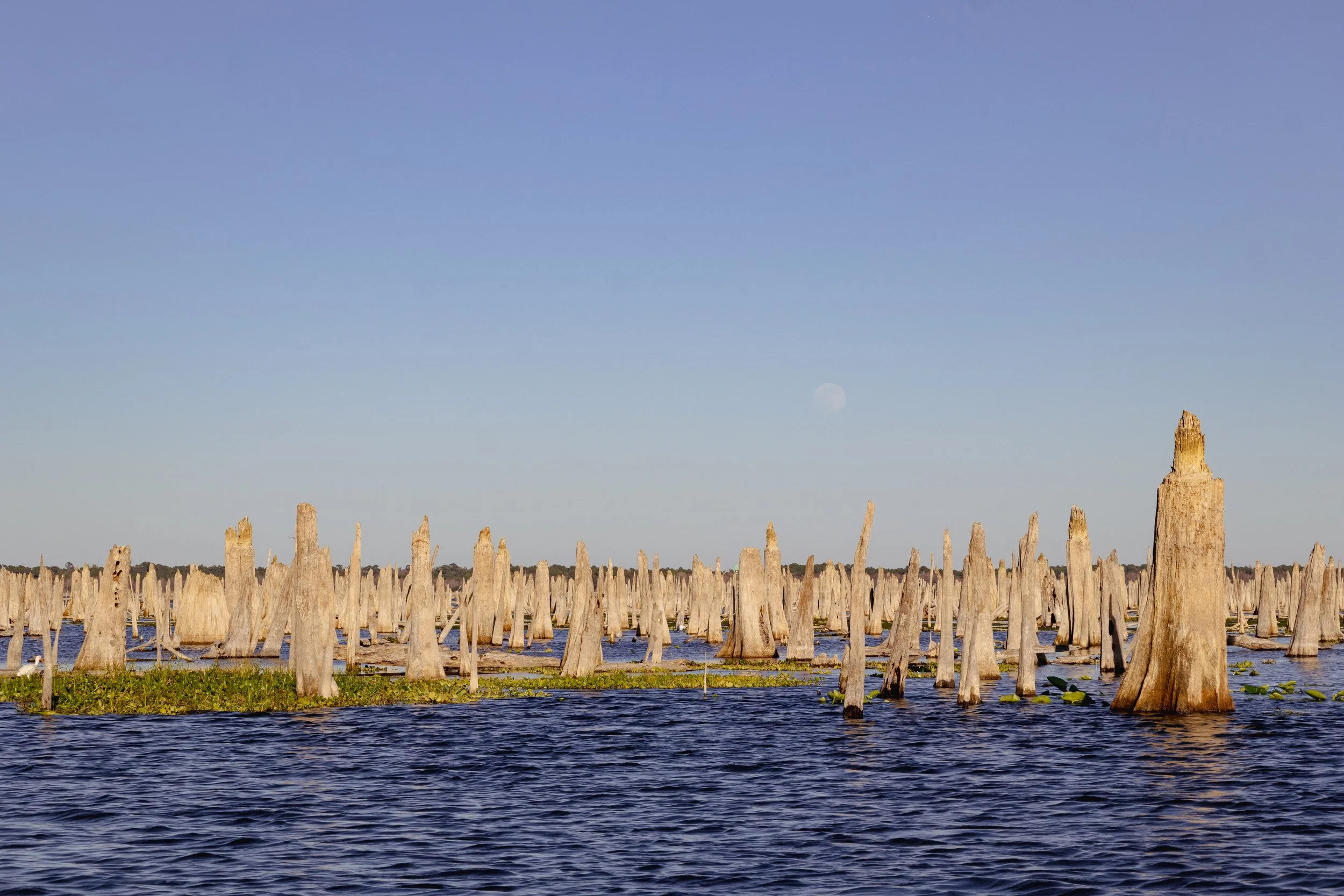
The moon lingers over Cypress stumps that emerge from the Ocklawaha River during a drawdown of the Rodman Reservoir.
Just four days ago, my partner and I traveled—appropriately—in our 16.5-foot stumpknocker to the Kenwood Recreation Area to launch into the water and into the past. Once advised by an old professor to do your own research, he steered us through the river. An eerie stillness hangs in the air as we wind along the unframed curves of the Ocklawaha. Gray, hollow, sun-bleached stumps reach toward the sky as far as the eye can see. Once more than one hundred feet tall, now reduced to slivers of their former magnitude, they have waited—submerged—for over fifty years, granted only a teasing, almost insulting glimpse of life above water for a few months every four years or so—never long enough to truly live.
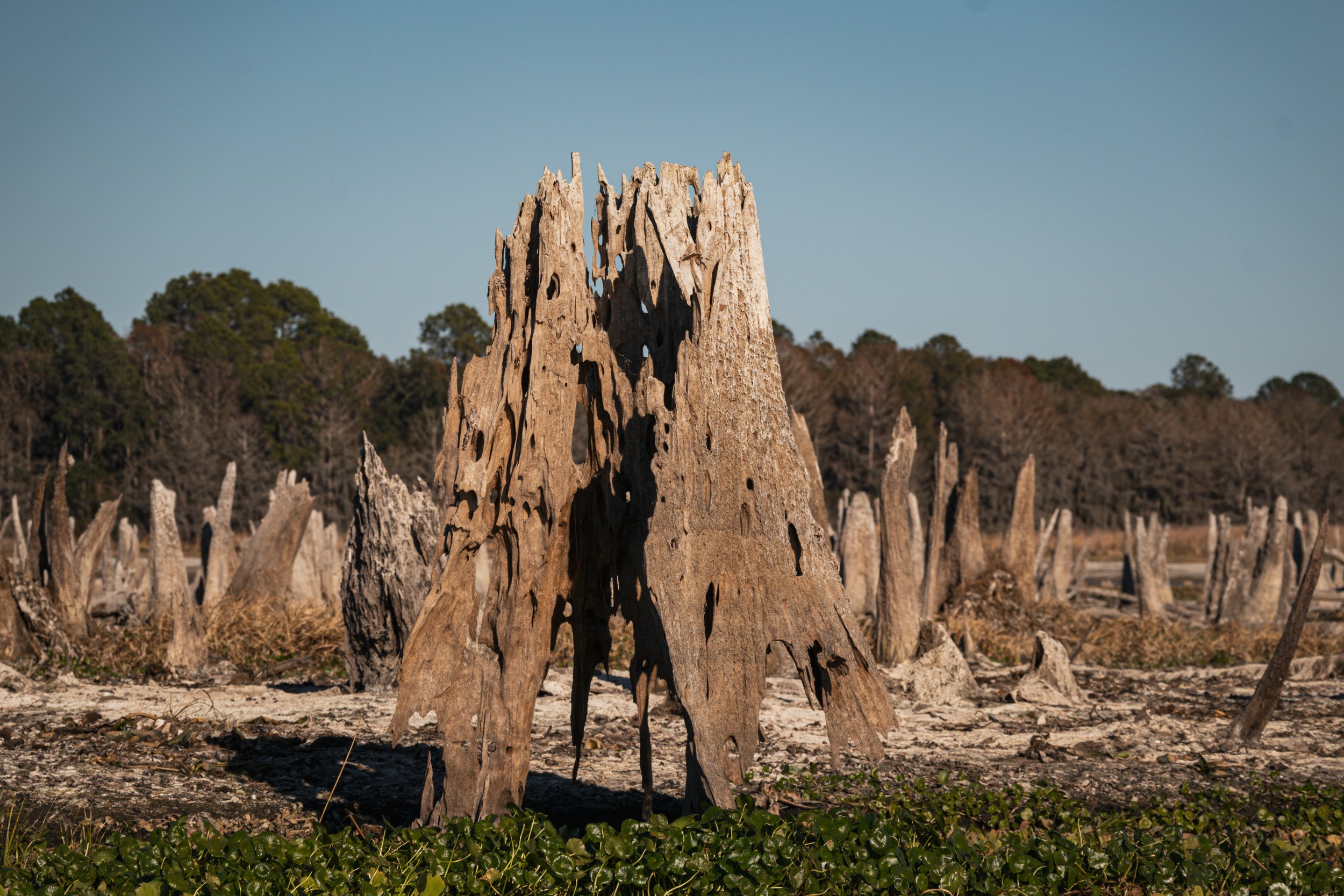
A weathered cypress stump stands among the remains of a forest submerged for decades by the Rodman Reservoir.
Each stump of the drowned cypress forest stands proudly above the surface, revealing history and endurance in every hollowed crevice. Some are barely intact. They remain upright nonetheless, as if pleading their case to stay exposed. Together, they honor what was and quietly foreshadow what could be again.
As we continue through the exhumed landscape, the radio clicks on briefly, then off. There is plenty to hear. We let the trees speak.
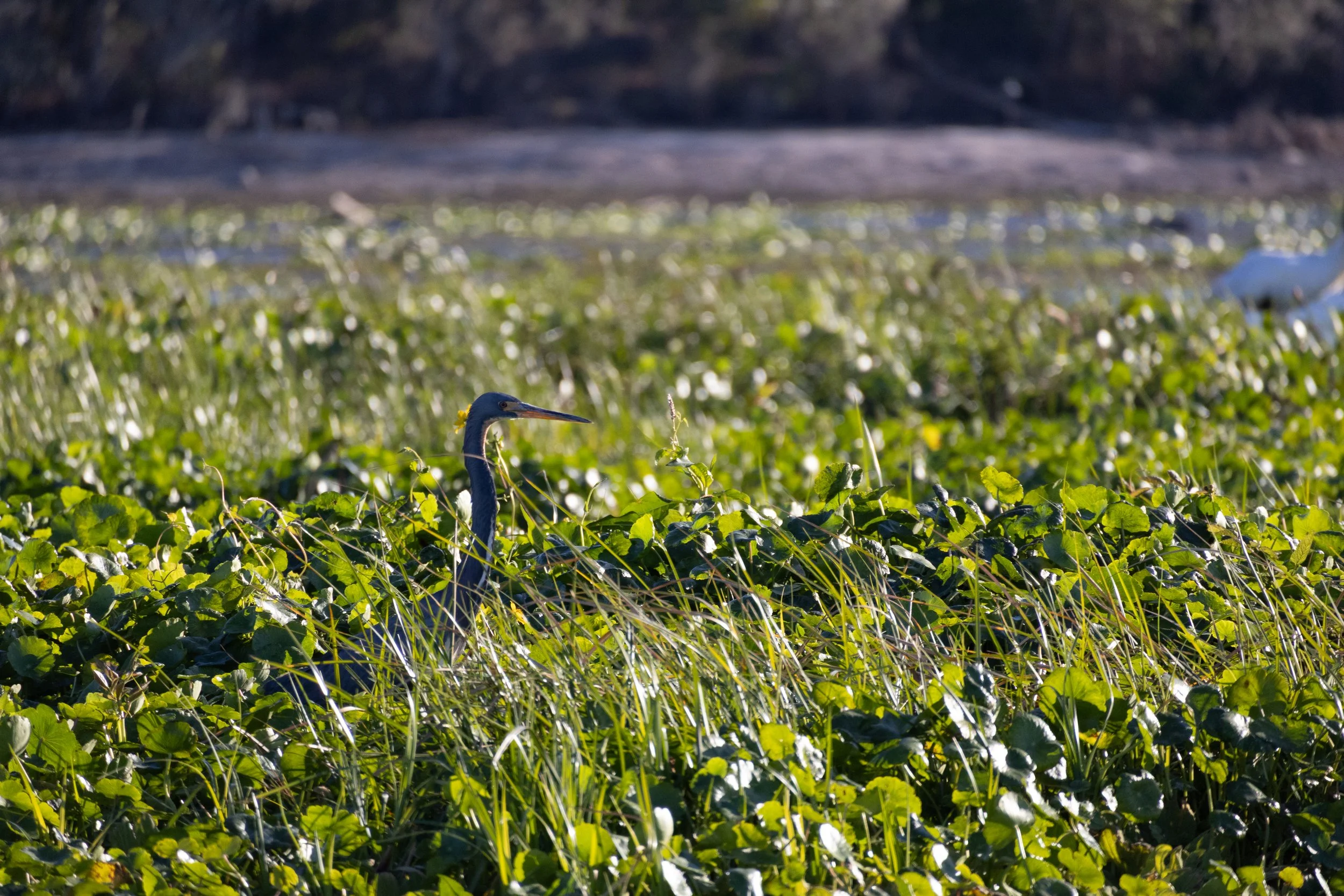
A heron moves through new vegetation growing along the exposed riverbanks of the Ocklawaha.
There is vigor in the graveyard. Bald eagles pass overhead. Male boat-tailed grackles perform for females perched atop the great cypress headstones. Bright green flora punctuates the sea of gray and, in places, spreads into a welcome mat of new growth. A plump alligator sunbathes on newly revealed earth, regards us briefly, then slips beneath the surface and disappears.
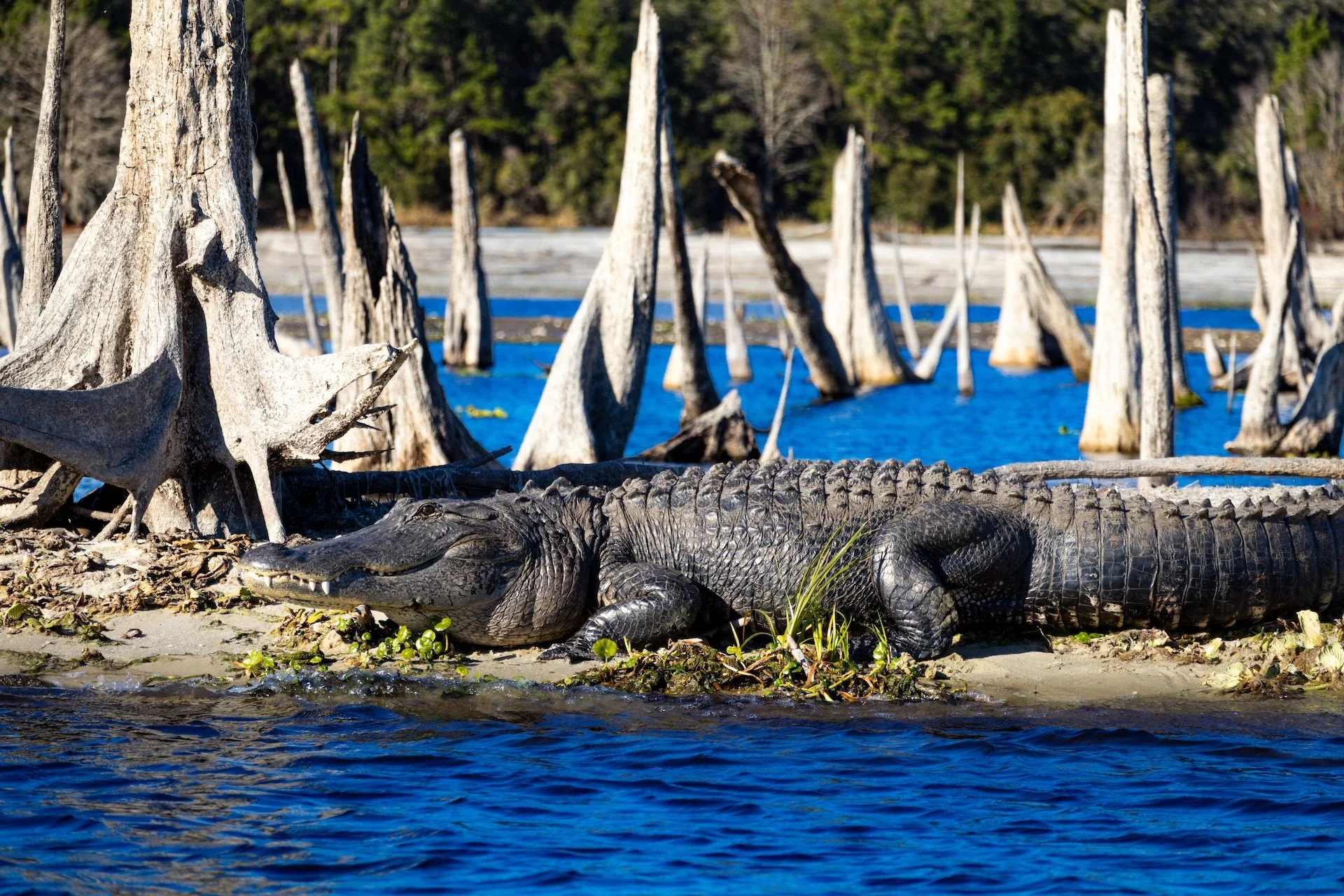
An alligator rests near newly exposed shoreline during a drawdown of the Rodman Reservoir.
After holding its breath on and off for more than fifty years, the river’s natural flow has begun to return life to the legs of the Ocklawaha. Rarely are we given the chance to witness, so tangibly and at the site of destruction itself, the consequences of our modern technologies and our long habit of trying to control what once moved on its own.
As lawmakers once again debate the future of the Rodman Dam, we are being asked—yet again—whether this river deserves to breathe.
I speak for the trees. Unless someone like you cares a whole awful lot, nothing is going to get better. It’s not.
